Dear Devlin · Advice for photographers
Fallen Out Of Love With Your Usual Wedding Style?
What to do when one creatively free wedding makes all your other galleries feel wrong.
By Lisa Devlin · 9 min read
In short
One wedding with total creative freedom has shown you who you want to be. Now your usual edits feel wrong. You can change direction without losing your market – show the work you want to be booked for, take people with you, and decide how to handle the galleries still on your desk.

The problem
When Your Best Wedding Makes Everything Else Feel Wrong
Dear Devlin,
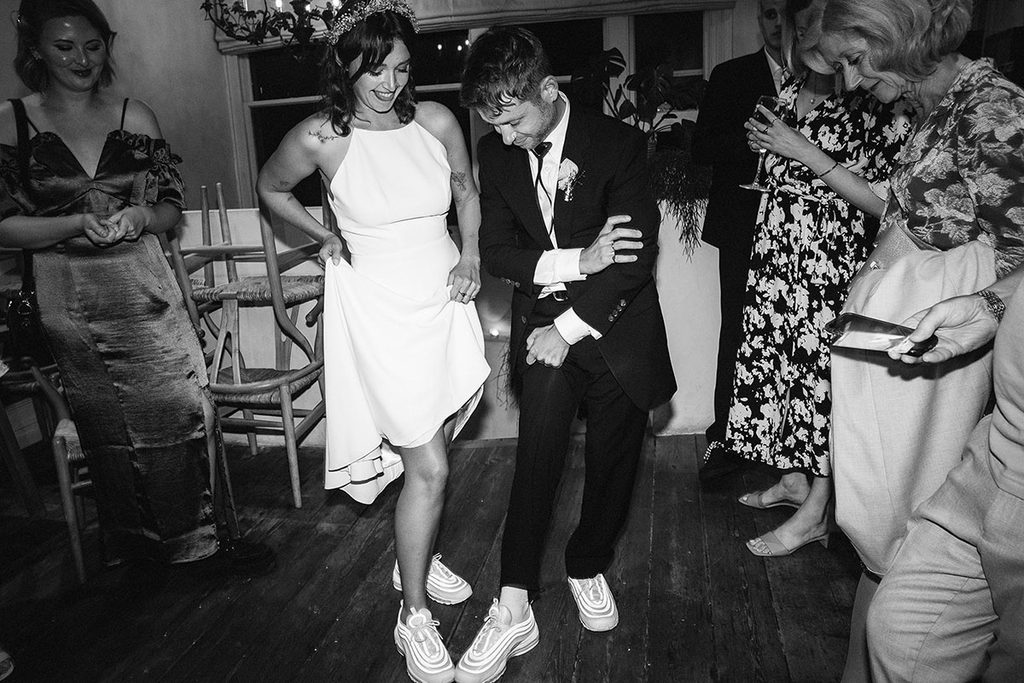
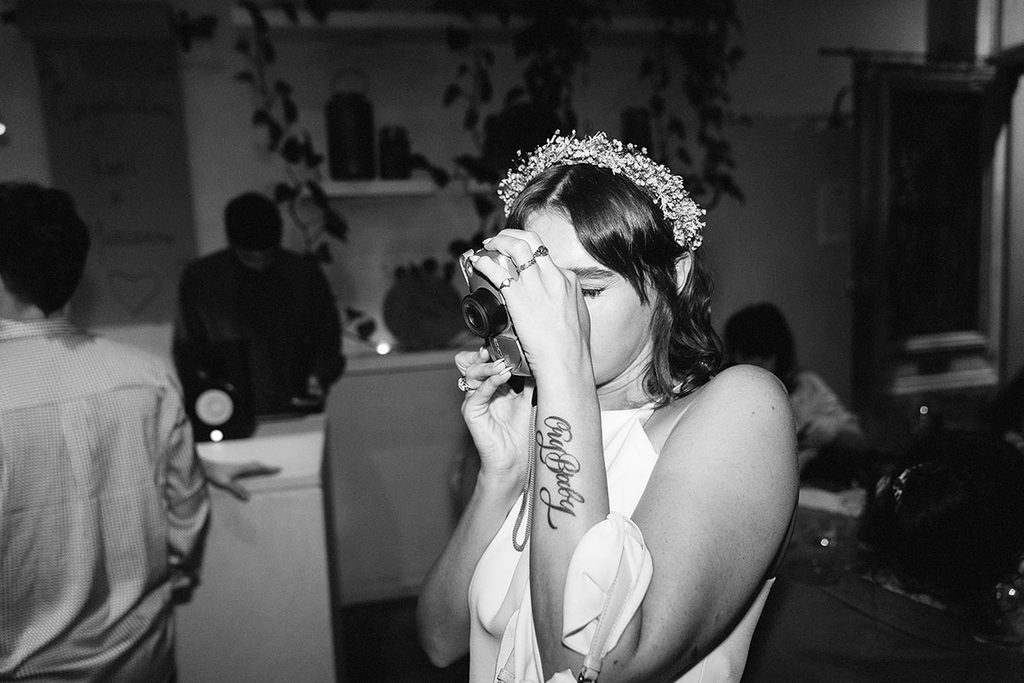
I recently shot a wedding for an industry friend (she’s a signage and decor artist). I’ve known her for years and have shot for her in the past. She and I have a love for analogue/artsy work and so I shot her wedding with total creative freedom, knowing that she would love the photos.
She specifically said she didn’t want any ‘traditional’ wedding shots like the dress hanging up, flatlays of rings etc and she didn’t want any traditional group photos.
I had so much fun, I went to town on more artistic shots and also with my edit, I knew I could really push it with a more analogue vibe.
Cut to the final gallery. It’s by far my best work, I adore it, the couple adore it, I’ve never had so many likes on a post… it’s a dream. And to be honest, the whole (12 hour) day felt so easy. I felt like I was just me, not a ‘wedding photographer’.
But the problem is, she is not the majority of my clients. I’m now editing my ‘regular’ weddings and I feel like I hate all my usual presets, everything looks too pink or too contrasty and I just really hate the ‘traditional’ set ups. Do I start editing my galleries the way I want? Or does that go against what people have booked me for?
I adore my job, but I think I’ve fallen out of love with the structured side of it. Not every client is going to be a bohemian artist who loves my specific style, so am I niche-ing myself out of the market?
Help!
And thank you xxx
Existential Crisis Tog
“In a busy market, you can never be too niche.”
Lisa’s answer
Dear Existential Crisis Tog,
What a gallery to have under your belt. And what a feeling, to come home from a 12 hour wedding day and realise it felt easy. Hold on to that, because it’s telling you something important.
Thanks for writing in with this. I always say that if one of us has an issue, chances are that others do too. Wedding photographers continually evolve, shift and change, so what you’re experiencing is entirely normal. Many of the photographers you admire will have hit this exact point somewhere along the way.
I’m a little delayed in answering, as my time has been taken up running our Thrive conference. But I think being there has actually helped me answer this better for you.
01 What Thrive taught me about your question
We had a beautiful common thread running through the keynotes this year, despite the speakers all being very different – in style, in approach, in where they are geographically and in where they are in their careers. That thread was about finding what you’re truly passionate about and fired up by in this job, and putting that out into the world. Each of them described the point where they discovered that within themselves, and that’s when a shift happened. That’s when they began to attract the right couples for them.
It sounds simple enough, but we’re in a noisy industry and it’s very easy to look sideways instead of within.
02 Are likes really the measure of success?
It’s also very easy to think we’re in some kind of popularity contest, where the goal is more followers, more likes, more engagement. But all of that rarely brings more job satisfaction.
I’ve found that some of the content I post that performs the least gets the best results – and by results I mean actual enquiries, from the perfect client for me. People who value the photography, who feel excited about this part of their wedding.
So yes, enjoy those likes. But notice that the real win here wasn’t the numbers. It was how you felt doing the work.
03 Is total creative freedom always the dream?
Getting a client to give us ‘total creative freedom’ is the ideal for many photographers. For some it would feel like the opposite, and they’d much prefer a tight brief and an exact shot list. Neither is wrong.
But you’ve had this opportunity, and it’s led you to a bit of a crossroads. The downside of a creative breakthrough like this is that your old work suddenly feels wrong. You want to shed that skin and move on to the next version of you. That’s tricky in weddings, because the pace is slow. The couples already on your books came to you for your old style, and if you want to commit to the transition, there’s some work to be done.
04 Show the work you want to be booked for
It’s a simple adage, but it’s true. If you decide to move forward with this fresh approach, your first step is to show more of that work.
That might mean going back through past galleries and pulling out images where you were already beginning to explore this way of working, then re-editing them. These changes are rarely a total bolt from the blue. More often they’ve been simmering away in the background before you took the leap with this seminal wedding.
If you really don’t think that’s the case, create some self-motivated work in your new style to bridge the gap between the old you and the future you. And don’t be afraid to remove work that no longer serves you – from your grid and from your portfolio.
05 Take your audience on the journey with you
Talk about your transition. The right people will be inspired by you sharing this part of your process, and it explains why your work is changing.
Try this caption
“Something’s shifting in my work. A recent wedding gave me total creative freedom and it reminded me exactly why I fell in love with photographing weddings. You’ll be seeing more of this here – more artistic, more analogue, more me. If this is how you’d love your day to be remembered, I’d really like to hear from you.”
Or be really brave and remove all the old stuff entirely. When I first discovered Brooke Davies, who has spoken at Farm multiple times now, she’d made a big transition like this – from traditional Mormon weddings in her area of Salt Lake City to much more artsy, alternative work. She stripped everything from her website and socials and showed just one elopement she’d orchestrated in the style she wanted to move towards. Bold, but effective. She left her old style behind and carried on down a career path of her own choosing, one that meant the right people could find and connect with her.
06 What about the galleries still on your desk?
While you’re in this transition phase, you have three options.
1
Edit and deliver in your new style and see how they go down.
2
Edit and deliver in your old style, and consider those weddings part of your past.
3
Edit a selection in both styles, send them to the couple and ask which they prefer.
If you go with option three, keep it light so it feels like a treat rather than a problem:
Try this email
“Hi [names], I’ve been working on your gallery and I’m so excited about it. My editing has been evolving this year and I’d love you to have a say. I’ve attached a few favourites edited two ways – which do you love most? I’ll finish the rest of your gallery in whichever you choose.”
When I’ve been where you are, I simply moved all my existing edits over to the new style and waited to see if anyone said anything, or asked for a re-edit in the old style. My thinking was that couples don’t pay as much attention to editing as we do, and they trust that you have the best eye for this. They booked you, after all, not your presets.
It also means you have far more work to share in your new edit, much sooner. And if someone does ask for the old look, re-editing a handful of their favourites is a small price to pay for moving forward.
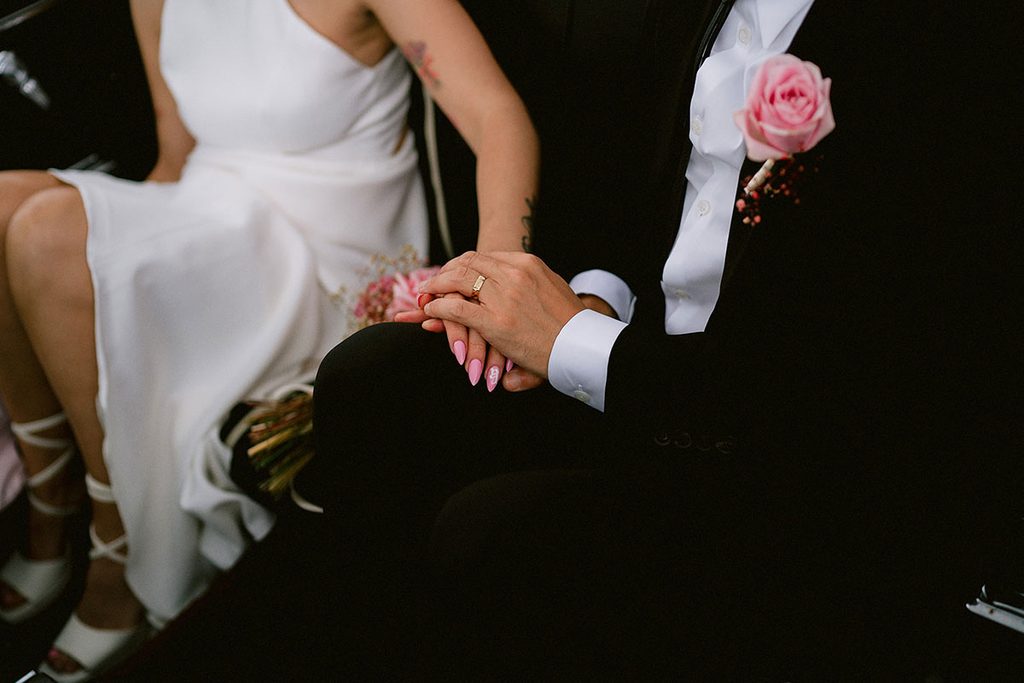
“They booked you, after all, not your presets.”
07 One wedding, many portfolios
Over a full day of coverage we take so many images that we can make many different selections, each showing a different facet of what we do. I could pull out purely documentary frames from my weddings and pitch myself as a documentary wedding photographer.
So don’t write off your ‘regular’ weddings. Go through them looking for the frames that feel like you now – the in-between ones, the artistic ones, the ones you’d have pushed further with free rein. They’re almost certainly in there. That’s your bridge.
08 What about the structured parts of the day?
Most couples will still want some traditional set ups, and that’s fine, but you get to decide how much space they take up. Shape this at the booking stage, not on the day:
Try this at booking
“I keep group photos short and sweet – just the handful of combinations that matter most to you – so you can get back to your day, and I can spend my time on the pictures you’ll treasure most.”
09 What happens when clients stop giving you a shot list?
Anni Graham, who spoke at Thrive, talks in the podcast we recorded together about reaching the point where her clients give her no input at all. No mood boards, no shot lists. They simply say, we trust you to do your thing. It’s well worth a listen, because it wasn’t always like that for her.
It was the same with Joanna Brown when she appeared on the podcast ahead of her Thrive appearance. She talked about working on film at weddings, and how what she takes is often just one frame – say, of the first kiss – but that’s her interpretation of that part of the day, and that’s what her couples get. It is so refreshing to hear.
Neither of them started there. They got there by showing the work they wanted to make, until the right people came looking for it.
10 Are you niche-ing yourself out of the market?
It sounds to me like you’ve had your own epiphany. You’ve realised that wedding photography doesn’t have to be about ticking boxes, or doing what you think is expected of you, all of the time.
I’m actually really excited for you. I very much believe in you, and I believe you can be found by the right people who will give you free rein.
Not every client is going to be a bohemian artist. But your friend isn’t the only couple in the country who’d love this work. There are plenty more out there – they just can’t find you yet, because your portfolio is still telling them you’re someone else. I’ve always said that in a busy market you can never be too niche. A niche doesn’t shrink your market. It makes you the obvious choice for the couples who matter most to you.
The takeaway
That wedding didn’t feel easy by accident – it felt easy because you were being yourself. Your job now is to make that the version of you couples find first. Show the work you want to be booked for, bring your audience along for the ride, and stop apologising for the evolution. The right couples are out there, and they’re waiting to see it.
Three Month Mentoring Programme
Changing direction?
Steering a style transition without losing your bookings is exactly the kind of thing we work through together.
CAN I HELP WITH YOUR
PROBLEM?
Drop me a note with any industry issue that you might have and I will do my best to offer up some advice.
After a couple of decades as a wedding photographer, the chances are high that I will have some experience that might be relevant or have some insight into what your best course of action could be
The process is 100% anonymous, so feel free to share whatever is on your mind currently and know that this is a safe place.

Please note: the images in this post do not represent anyone mentioned